Social
Examining associations between place of birth and unmet healthcare needs among Ontario residents: An analysis of the 2023 Canadian Community Flourishing Survey Adrian Foster* Adrian Foster Foster Foster Foster Foster Foster Foster University of Toronto
Introduction
Newcomers to Ontario, Canada, particularly younger individuals, frequently face barriers to accessing healthcare due to limited system knowledge, cultural barriers, socioeconomic constraints, and insurance eligibility. Understanding population-level unmet healthcare needs among newcomers is critical for advancing health equity.
Methods
We used multivariable negative binomial regression to estimate the risk of unmet healthcare needs by place of birth (inside vs. outside Canada) among Ontario residents aged 18 years and older. Data were drawn from a complete case analysis of the novel 2023 Canadian Community Flourishing Survey (CCFS), a national survey of community wellbeing and health outcomes. Models adjusted for gender, age, household income, urbanicity, and racialization, with age and racialization examined as effect measure modifiers. Model diagnostics assessed collinearity, residual distributions, and variable transformations.
Results
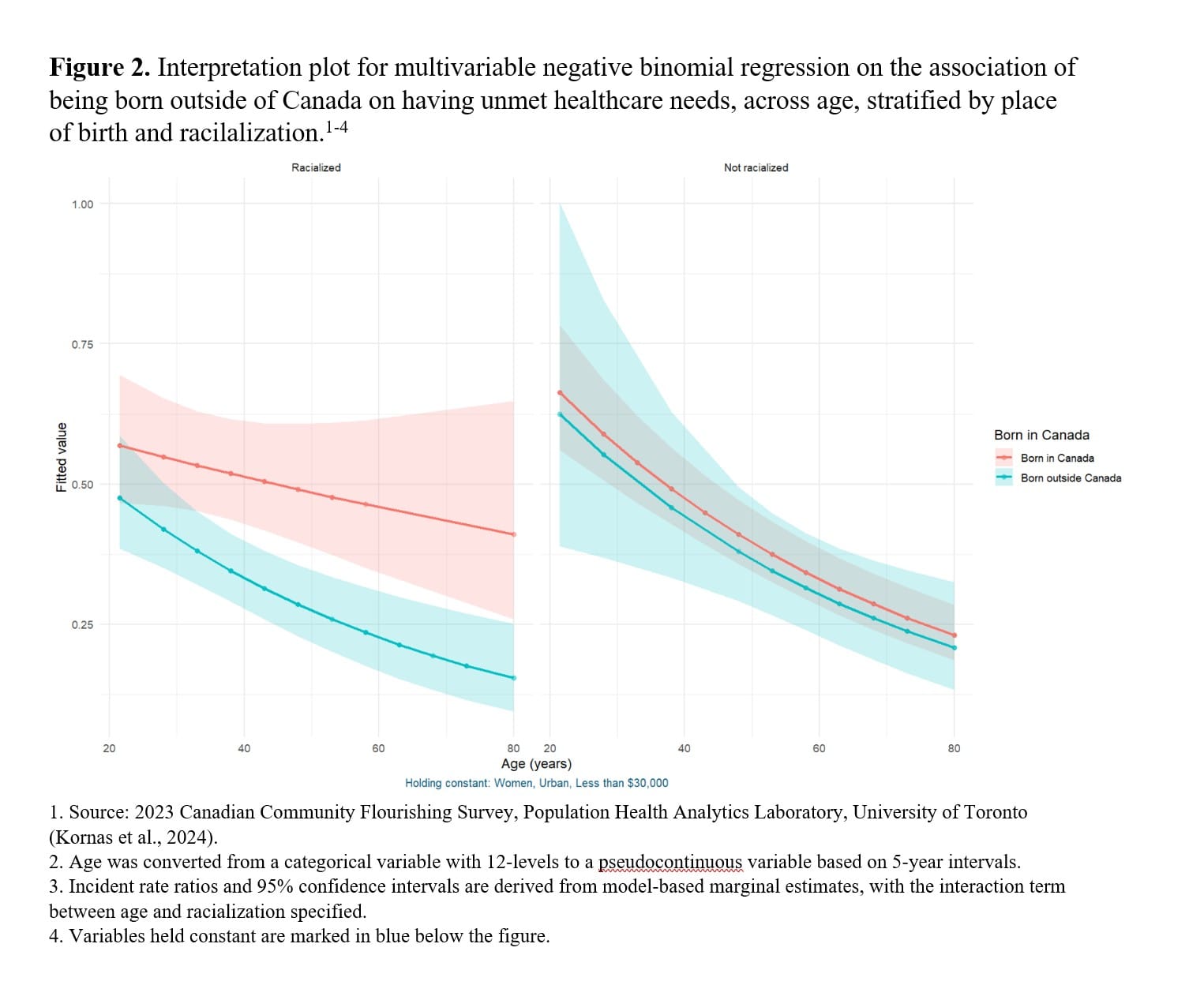
Among Ontario respondents, 28.1% were born outside Canada. Unmet healthcare needs were reported by 26.5% (95% CI: 24.1–29.1%) of those born outside Canada, compared with 34.0% (95% CI: 32.4–35.8%) of those born in Canada. Among racialized respondents aged 30 years, those born outside Canada had 0.74 times the risk of unmet healthcare needs (95% CI: 0.61–0.90) compared with those born in Canada; among racialized respondents aged 70 years, the risk was 0.43 (95% CI: 0.26–0.72). No significant differences were observed among non-racialized respondents aged 50 years (RR: 0.92; 95% CI: 0.72–1.18).
Conclusion
Age and racialization modify the association between place of birth and unmet healthcare needs. Racialized individuals born in Canada experienced notably higher unmet needs, identifying them as a key equity-seeking group. Greater disparities among younger individuals highlight the need for policies that expand culturally and linguistically appropriate care and improve healthcare accessibility for younger newcomer communities.