
2026 SER Elections
Candidates President-Elect
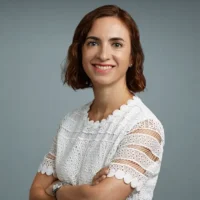
Magdalena Cerdá
NYU Langone Health
Candidate Statement:
It is one of the highest honors in my career to be nominated for President of the Society for Epidemiologic Research. SER has been my intellectual and professional home for the past 20 years.
I direct the Epidemiology Division at the Department of Population Health of NYU Grossman School of Medicine, where I also founded and currently lead the NYU Center for Opioid Epidemiology and Policy. As of July 1, I will become Chair of the Department of Chronic Disease Epidemiology at the Yale School of Public Health. My research focuses on addressing two of the leading reasons why people in the United States die earlier than people in comparable countries: overdose and gun violence. I aim to answer three questions: (1) what impact do state and local laws have on access to evidence-based interventions and risk of injury and death?; (2) how and where should we target interventions to ensure maximal and equitable impact?; and (3) what types of interventions work best for each setting and population? My current NIH-funded research focuses on: understanding how disasters and other “Big Events” affect people’s risk of overdose; evaluating how municipal laws affect drug-related harms; and investigating the impact of overdose prevention centers on the health of people who use drugs. I am also interested in understanding how the impact of violence prevention programs could spread across social networks to produce a population-level benefit.
I hold three guiding principles as paramount in this work: (1) conducting research at the highest standards of scientific rigor; (2) centering the voices of people with lived and living experience at all stages of research; and (3) having real-world impact in policy and practice.
I place tremendous value on mentoring and teaching the next generation of epidemiologists. I received the Population Health Mentor of the Year Award in the Department of Population Health in 2023 and 2025, for excellence in mentorship of doctoral students and junior faculty. As Director of the Epidemiology Division, I have prioritized strengthening the epidemiology doctoral program and investing funds in student and staff training and professional development. As Director of the Center for Opioid Epidemiology and Policy, I have deeply invested in training the next generation of researchers in substance use epidemiology, creating weekly spaces for staff-student-faculty cross-mentoring, monthly meetings for staff and students to share works in progress, and the data and resources needed to facilitate involvement in research.
This is a critical time for public health. By building a community of epidemiologists committed to addressing the world’s most important health challenges, SER is ideally placed to make a difference. We can use rigorous epidemiologic methods to inform effective policy and practice, and establish strong partnerships across sectors to make translation possible. As President, I will grow the role that the organization plays in informing the public health conversation. This includes, for example, strengthening representation at SER of practicing epidemiologists in government agencies and community organizations, creating spaces for members in the academic and practitioner spheres to come together to discuss how we can leverage new scientific developments to inform public health action, and offering workshops on communication and on public health translation for epidemiologists. By working together, we can ensure that we promote cutting-edge research that has an impact on people’s lives, and that we foster the growth and proliferation of the field of epidemiology in a particularly challenging time.

Jodie Guest
Emory University
Candidate Statement:
It is a great honor to be a candidate for President of the Society for Epidemiologic Research. SER has been a defining professional home throughout my career.
I am a Professor of Epidemiology and Senior Vice Chair of the Department of Epidemiology at the Rollins School of Public Health at Emory University. My work focuses on racial, sexual, and gender minority populations in HIV care, emergency preparedness, rural health, vaccine hesitancy, and science communication—centering communities facing inequitable access to care, stigma, and structural barriers. Beginning in March 2020, I created and led Emory’s Outbreak Response Team for COVID‑19, partnering with poultry plant workers, people experiencing homelessness, and others with limited access to testing and vaccination. I also developed public‑health response plans for numerous organizations across the country, including serving as the Iditarod Sled Dog Race COVID Czar from 2021–2023. I now serve as the Iditarod Public Health Director, supporting infectious‑disease mitigation across rural Alaskan villages.
I am deeply committed to improving science communication, grounded in the belief that our work—no matter how rigorous—is only meaningful if people can understand it, use it, and trust it. This commitment feels especially urgent now. Vaccine uptake is declining in many communities, measles outbreaks are re‑emerging, and trust in science has been profoundly eroded. At the same time, the public‑health workforce and training pipeline are fragile as students lose mentors, research programs contract, and opportunities diminish. In this context, SER’s mission “to keep epidemiologists at the vanguard of scientific development” requires not only the continued production of high‑quality research but also strengthened engagement and clear, credible, and compassionate communication with policymakers, practitioners, and the public. To contribute to this effort, I created and lead Emory’s Science Communication Certificate, which prepares students and professionals to translate evidence effectively, ethically, and with cultural humility.
If elected President, I will prioritize elevating science communication as a core competency of epidemiology, aligning training with emerging workforce needs through rapid‑response upskilling opportunities, expanded mentoring networks, and protecting the visibility and integrity of our science while elevating member scholarship in national conversations on health equity, surveillance, and prevention.
As a SER session chair, I have seen how this community nurtures first‑time presenters, fosters rigorous debate, and challenges us to do better science for a better world. In this moment of disinvestment and distrust, we must lead—not quietly or reactively, but boldly, visibly, and collaboratively. I would be honored to serve as SER President and work together to rebuild trust, strengthen our pipeline, and ensure that the excellence of our science is matched by the clarity and humanity of our communication.
Member At Large
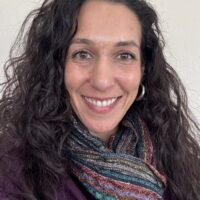
Nadia N. Abuelezam
Michigan State University
Candidate Statement:
I am humbled to have been nominated for the Member-at-Large position. I believe SER is at an important inflection point given the current pressures on the field.
As the field evolves, so too must the structures that determine who belongs, whose work is centered, and who is given time and space to shape the discipline. My interest in this position is grounded in a structural understanding of equity. Beyond recruitment alone, I am deeply interested in how professional organizations signal value through committee composition, leadership pathways, conference programming, and informal norms about visibility and voice. Serving in this role offers a meaningful opportunity to examine how SER can more intentionally cultivate a membership that reflects the diversity of epidemiology while ensuring that members from historically marginalized backgrounds are supported, retained, and empowered to lead. I hope to engage in questions about community representation and the role of lived experience in SER’s activities and leadership.
I bring to this role prior service on SER’s Diversity, Equity, and Inclusion Committee, including time as both a member and Chair. That experience sharpened my appreciation for the importance of sustained institutional commitment and cross-committee collaboration that I hope to continue in this role (should I be elected).
I am currently the 1855 Associate Professor of Family Medicine at Michigan State University College of Human Medicine, where my work as an epidemiologist, mentor, and collaborator is closely aligned with SER’s mission. My recent work has aimed to interrogate the ways that structural forces impact the discipline and the experience of scholars in the field. SER has been a formative professional home for me, shaping my scholarship and my understanding of epidemiology as both a scientific and ethical enterprise. As Member-at-Large, I would bring a reflective, systems-oriented approach to membership that asks who is invited in and how SER creates the conditions for all members to thrive.
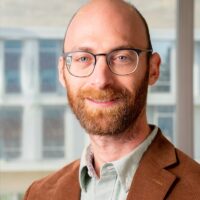
Neal Goldstein
Drexel University
Candidate Statement:
My name is Neal Goldstein and I have been a member of SER since 2015, attending my first conference in Denver as I was finishing my PhD in epidemiology.
I was both surprised and humbled to learn that I was nominated to be a Member-at-Large. SER is my home society and it would mean so much to be to be able to give back in multiple ways. By way of a brief background, after finishing my PhD, I did a two-year postdoc at a hospital system in Delaware researching infectious disease transmission in the neonatal intensive care unit. I started on faculty at the Drexel University Dornsife School of Public Health in 2016 rising to an Associate Research Professor in 2022. After a decade on faculty, I joined Geisinger Health System helping to build a program evaluation group for the healthcare system. This position spans many of my interests, including electronic health records and insurance claims, methods for assessing bias and validity, and causal inference under non-experimental settings.
I have been active in SER since my time as a student in many ways. I have presented at the annual meeting nearly every year including poster sessions and platform talks. I have organized and chaired three symposia on topics including reproducibility, validity of COVID-19 surveillance data, and methods for improving electronic health record research. I was co-chair of the 2022 SER mid-year meeting held in Philadelphia, entitled “Intersecting pandemics: COVID-19 + health disparities.” Since 2019, I have chaired an ongoing pre-conference workshop on “Epidemiological analysis of electronic health records” and as of last year, started co-chairing a second pre-conference workshop called “Working with unstructured data and text analysis in electronic health records.” I have been fortunate to work with another SER member-at-large, Milena Gianfrancesco, on both workshop activities. Lastly, for 2026 I am serving for the first time as faculty at the SER mid-year dissertation workshop. Mentoring students and early career faculty is something I am especially passionate about.
Being a member of the awards committee would be an ideal way for me to contribute to SER in an area I am already familiar with. I have been extremely fortunate to win two awards from SER. In 2016 I received the Tyroler Student Prize Paper Award for work completed while I was a doctoral student. And in 2017, work that I complete during my postdoc was selected for the Lilienfeld Postdoctoral Prize Paper Award. I was also a two-time finalist for the Brian MacMahon Early Career Epidemiologist award. I have served on awards committees before: while at Drexel and presently for the College of Physicians of Philadelphia, where I am a fellow. I look forward to sharing my experiences with the SER awards committee and helping to recognize outstanding achievement by epidemiologists across all career stages. I am excited to further my involvement with SER as a member-at-large. Thank you for considering my election!
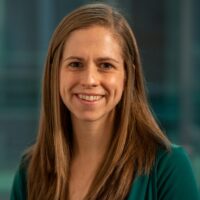
Meredith Shiels
National Cancer Institute
Candidate Statement:
I am honored to be nominated for the SER Member-at-Large. I have been a member of SER for nearly 20 years since I attended my first meeting as a PhD student in 2007.
I believe that SER serves an important role in bringing together epidemiologists from trainees to senior scientists, and from different career paths and areas of expertise. The SER annual meeting also provides an important venue for many of us to reconnect with colleagues and friends from institutions across the globe. My involvement in SER has grown over the years. Scientifically, I have organized and co-chaired three symposia and have chaired three oral abstract sessions focused on surveillance research and cancer epidemiology. I have also contributed to the organization by participating in mentoring breakfasts, and served as a member of the SER Awards Committee from 2022-2025. Serving on the SER Awards Committee for three years was a highly rewarding experience. It was an honor to be part of a committee that focuses on recognizing the contributions of our colleagues to our field and also provides funding to those who would otherwise be unable to attend the annual meeting. This experience will allow me to smoothly transition into the role of Member-at-Large, if elected. During my time on the Awards Committee, SER improved the reach of the nomination process and the procedures for selecting awardees. I hope to build on these efforts and work with both SER leadership and committee members to broaden nominations across the spectrum of career types.
My whole career has been spent within the Intramural Research Program of the National Cancer Institute. After graduating with a PhD in cancer epidemiology from Johns Hopkins in 2009, I came to the Division of Cancer Epidemiology and Genetics for my post-doctoral training. I transitioned to a tenure-track position and have been a Senior Investigator since receiving scientific tenure in 2021. I think that my position as a researcher within the federal government gives me a unique perspective, as I carry out investigator-driven research like an academic, but also have to face the challenges and opportunities of being a federal employee. My research largely focuses on surveillance work – I strive to understand patterns of cancer incidence and mortality over time and across populations, and what is driving those trends at a population level. I also have a particular interest in cancer risk and burden among people with HIV. If elected to serve as a Member-at-Large, I would like to encourage a broader scope of topics highlighted at the annual meeting and the involvement of epidemiologists from both academic and non-academic institutions. The draw of SER is the opportunity to learn from colleagues with different interests, expertise and experiences, resulting in new collaborations and stronger and more impactful science.
Cast Your Vote
Login Required:
You must be logged in to register for the meeting. Please Login Below: